What’s Really Building Up on Your Windows
Outside window glass collects more than dust. Pollen, dried water drops, and grime near the frames can leave different marks. Look closely before you scrub: the mark’s shape can tell you where to start and when to stop.
From a few feet away, that dull look may seem like one layer of dirt. Get closer. You’ll often see separate marks that need different care. We notice this during outdoor glass cleaning in Davenport, FL: a quick rinse can leave the glass looking almost the same.
Why does the glass still look cloudy after rain? Rain can carry loose dirt down the pane, then leave marks as it dries. And dirt caught along the frame may run onto glass that looked clean minutes earlier.
A clear pane starts with knowing what’s stuck to it.
Look at the marks in good light before you pick up a cloth. These are the patterns we check first before cleaning:
- A soft, even haze may be fine dust or pollen. Rinse it away first so your cloth doesn’t drag grit across the glass.
- Round spots may be dried water drops. If nearby sprinklers reach the window, check that area first.
- Dark streaks near a frame may come from dirt caught along its edge. Washing the center alone won’t remove that source.
- Smears that appear after wiping may be leftover cleaner or grime on the cloth. Change the cloth before making another pass.
And don’t press harder just because a spot stays put. We often see people rub one mark while leaving loose grit around it. Start by rinsing the pane. Then work from top to bottom with clean tools.
Picture a Davenport homeowner cleaning a patio-facing window after spring pollen settles nearby. The center clears, but a cloudy band stays along the lower edge. That band isn’t a reason to scrub the whole pane again. Check the frame and the water collecting at its edge instead.
Not every mark is dirt.
We also check whether a mark changes when the glass is wet. That’s a useful clue. A mark that stays visible may need a closer look, not more pressure. But the edge tells another story.
See tiny specks near a screen? Easy to miss. We find that screens can hold dust close to the glass. And if you wipe the pane without checking the screen, fresh dirt may settle back onto it.
So take one slow look before you clean. Notice where the marks begin and where water tends to run. That small step helps you choose a gentler first pass and see what still needs attention.
Supplies You’ll Need Before You Start
Start with the windows you can reach while standing on the ground. You don’t need a big kit for those panes. You do need clean tools. A dirty cloth can move grit across the glass instead of picking it up.
Gather everything before you turn on the hose. That saves trips across wet ground. We see this mistake often: someone wets every window, then hunts for a dry cloth. By then, the first panes may need another pass.
Keep these supplies close to the first window:
- A bucket of clean water and a small amount of mild dish soap. You only need enough soap to help lift dirt. Too much leaves suds that take extra work to remove.
- A soft sponge or window scrubber. Check it for sand before each pane. If you feel grit, rinse the tool instead of pressing harder.
- A squeegee with a clean rubber edge. Look along the edge for nicks or stuck debris. A damaged edge can leave lines, even after you’ve washed the glass.
- Several clean microfiber cloths. Set one aside for wiping the squeegee blade. Keep another dry for the glass edges and bottom corners.
- A hose with a gentle spray setting and an empty bucket for rinsing tools. Use the hose to loosen loose dirt first. Skip a hard blast near window frames and seals.
Set your clean cloths on a dry surface, not the lawn. The cloth catches grit, the glass stays clearer. And change your bucket water when it looks cloudy. You shouldn’t have to guess whether you’re washing with dirt.
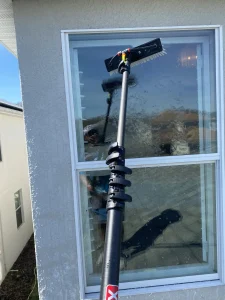
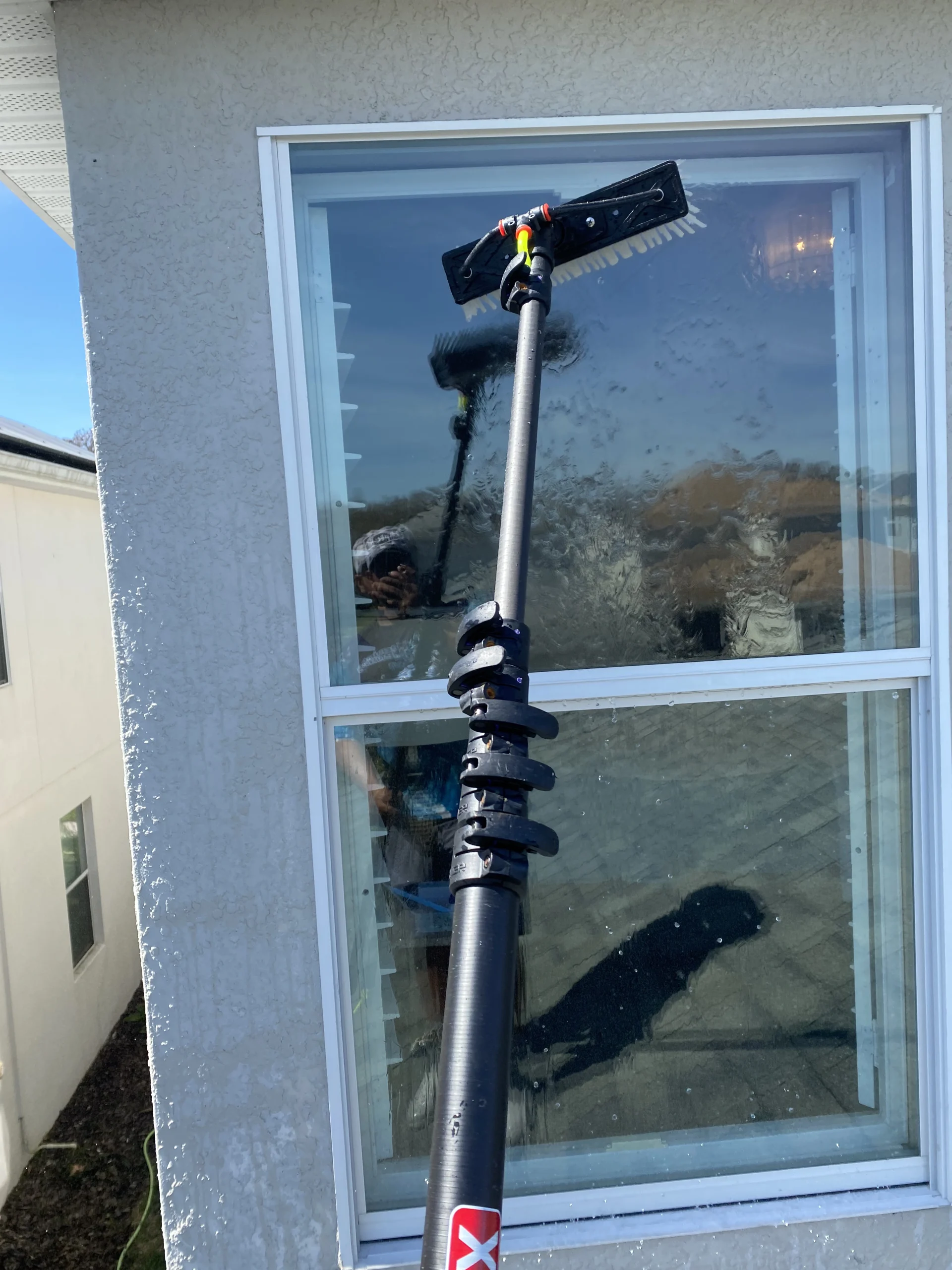
What about upper windows? A window-safe extension pole may help you reach some panes. Check its length while you’re still on dry ground. A short pole feels steady, a long pole can wobble. If you can’t control the scrubber and squeegee, don’t stretch farther.
Leave ladders out of this basic setup. And don’t lean through an open window to reach the outside. Keep both feet on firm ground. For higher glass, it’s reasonable to ask about professional exterior window cleaning instead.
In Davenport, FL, we often plan this work for a cooler part of the day. We also check the glass before mixing the bucket. You might find stuck-on dirt near a sprinkler-facing window. So rinse that area gently first. Don’t scrape it with a household blade.
One last check.
Put on shoes that grip, then move anything underfoot. Keep your tools where you won’t trip over them. But if a window needs a ladder or an awkward reach, stop there.
Step-by-Step: How to Clean Window Glass From Outside
Start with what you can reach. You don’t need a complicated setup. You need a safe spot to stand, clean tools, and enough time to finish each pane.
We use the same basic order every time: remove grit, wash, pull away water, then dry the edges. And we never scrub dry dirt across the glass.
- Check your reach before you start. Stand on firm, level ground. Can you clean the whole pane without leaning or climbing? If not, leave that pane alone. No ladder. Move outdoor items that block your path, and keep your tools close.
- Brush loose dirt from the frame and glass. Use a soft brush or a clean, damp cloth. Pay attention to the top edge, where dirt can wash down later. We see this often: someone cleans the pane first, then dirt from the frame runs over it.
- Mix a small amount of mild dish soap with water. Dip a soft sponge or window scrubber into the mix. Wet the glass from top to bottom with light pressure. Don’t press grit into a stubborn spot. Soak it first, then wipe it gently.
- Pull the water off with a clean squeegee. Start at the top and work down in steady passes. Wipe the rubber edge after each pass with a clean cloth. And keep each pass close to the last one so you don’t leave wet strips behind.
- Dry the edges with a separate, dry cloth. The bottom edge holds drips, and those drips can run onto clean glass. Check the corners and the strip along the frame. Small sections. If your cloth gets wet, switch to a dry part before you keep going.
- Step back and look at the glass from an angle. Do you see a streak? Wipe that spot with a clean, slightly damp cloth. Then dry it right away. But don’t keep rubbing the whole pane. Work on the marks you can see.
Choose a time when the glass isn’t hot to the touch. Soap can dry before you remove it, leaving marks behind. In Davenport, FL, a shaded side of the house may give you more time to work. We usually finish one pane before wetting the next.
After a spring shower, check for fresh dirt around the frame before washing. A quick wipe there can save you from cleaning the same pane twice.
And if reaching the top pane takes a ladder, stop there.
You can clean the reachable glass yourself and leave high panes for professional exterior window cleaning. You’ll get the job done without turning a simple wash into a fall risk.
Frequently Asked Questions
Is Dawn dish soap good for cleaning glass windows?
Yes, a small amount of mild dish soap like Dawn works well for outside glass. It lifts dirt without leaving a heavy film if you rinse it off fully. Use only a few drops in a bucket of water. Too much soap leaves suds that are hard to squeegee away. If your Davenport, FL windows sit near sprinklers, rinse first before adding soap so you’re not scrubbing grit into the glass.
Does vinegar clean glass better than Windex?
Vinegar and water can cut through haze and water spots about as well as a store-bought glass cleaner. Mix one part vinegar with a few parts water for a gentle solution. It works best on light dust and pollen film, not caked-on dirt near frames. For tougher outside grime, start with soap and water first, then use a vinegar rinse to help prevent streaks before you squeegee.
What do professional window cleaners use to clean outside windows?
Professionals use a squeegee with a sharp rubber edge, a scrubber or sponge, and a mild cleaning solution, much like the basic steps in this guide. The real difference is tool care and technique. Clean blades and cloths prevent streaks, and proper pole or ladder use lets them safely reach high glass. If your home has upper-story windows you can’t safely reach, it’s worth asking about professional exterior window cleaning for those spots.
Why does my window glass still look cloudy after it rains in Davenport?
Rain often carries loose dirt down the pane and leaves marks behind as it dries, rather than cleaning the glass fully. Dirt sitting along the frame can also run down onto glass that looked clear before. This is common on Davenport homes near sprinklers or open yards. Checking the frame edge first, then washing top to bottom, helps stop this cycle during your next cleaning.
How does Davenport’s climate affect outside window cleaning?
Florida’s heat, humidity, and frequent pollen in Davenport mean windows build up grime faster than in drier climates. Sprinkler overspray can also leave mineral spots that bake onto glass in the sun. Cleaning during a cooler part of the day keeps your soap solution from drying too fast and leaving streaks. Regular rinsing between washes helps reduce the buildup these conditions cause.
Is it ever risky to clean window glass from outside yourself?
Yes, reaching second-story or hard-to-access windows without a stable ladder or pole can be unsafe. Leaning out an open window or stretching a scrubber too far are common mistakes that lead to falls. Stick to windows you can reach from firm, level ground. For anything higher or harder to reach, it’s safer to ask about professional exterior window cleaning instead of risking a fall.