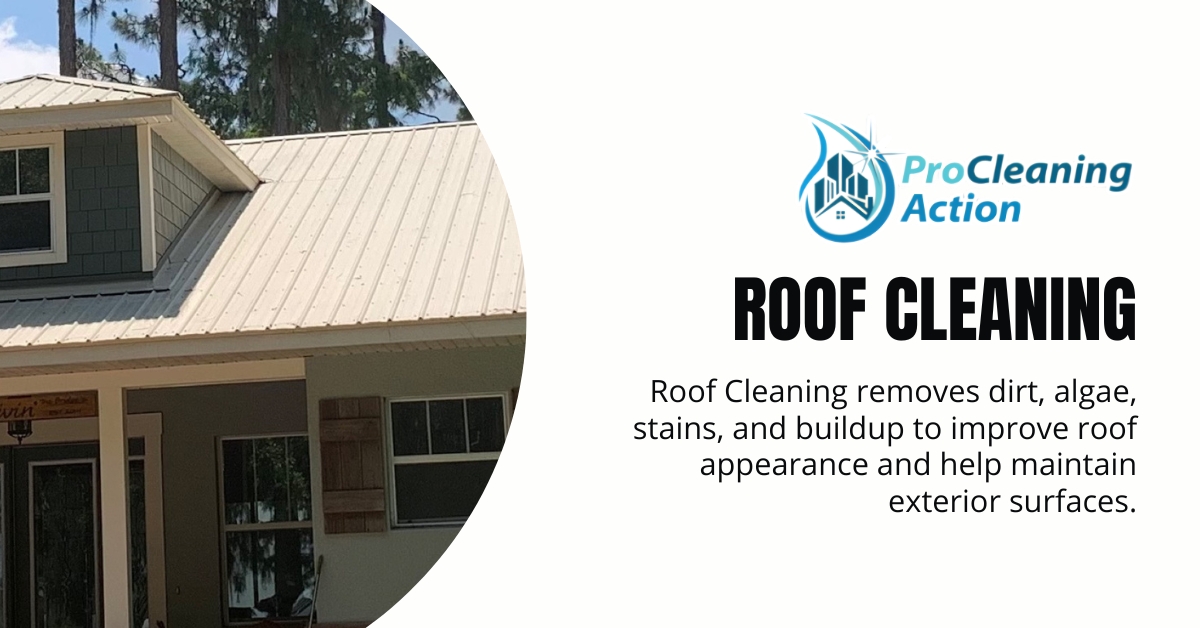
If you have driven through a Davenport neighborhood lately and noticed dark streaks running down a neighbor’s roofline, you already know how common the problem is around here. Between the humidity rolling off nearby lakes, the shade from mature oak canopies, and Central Florida’s near-constant warmth, roofs in this part of Polk County practically invite algae, moss, and mildew to move in. That’s why so many homeowners and business owners search for roof cleaning services in Davenport before the staining spreads further or starts affecting resale value.
This guide explains what causes those stains, how professional roof cleaning works, what separates a safe process from a risky one, and what to expect when hiring a roof cleaning company in Davenport for a home or commercial property. The goal is not just to sell a service but to help you understand exactly what you are paying for and why it matters.
Why Roofs in Davenport Get Dirty So Fast
Florida roofs age differently than roofs in drier climates, and Davenport sits right in the middle of conditions that accelerate the process. Three factors do most of the damage.
Humidity and heat. Davenport’s subtropical climate keeps moisture sitting on rooftops longer than it would in a drier region. That moisture becomes the perfect breeding ground for algae, particularly a species called Gloeocapsa magma, which is responsible for those dark streaks most people mistake for dirt or soot.
Tree cover and organic debris. Neighborhoods near Ridgewood Lake, Lake Marion, and the wooded pockets around US-27 tend to have heavier tree canopy. Falling leaves, pollen, and branches create organic buildup that traps moisture against shingles, giving moss and lichen a foothold.
Roof pitch and shading. North-facing roof slopes and sections shaded by trees or taller structures dry out more slowly after rain. Those shaded, slow-drying areas are almost always where staining shows up first and spreads fastest.
None of this means a roof is failing. It means biological growth has taken hold, and left untreated, it can shorten the lifespan of shingles by trapping moisture and breaking down granules over time.
What Roof Cleaning Actually Removes
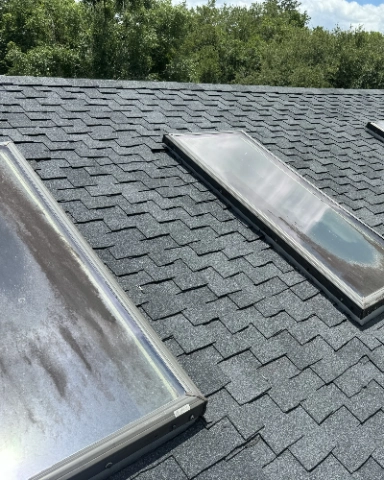
A lot of homeowners assume those black streaks are dirt from traffic or pollution. In reality, they are living organisms feeding on the limestone filler in asphalt shingles. Professional roof cleaning targets several specific types of growth:
- Algae streaking, the dark, greenish-black stains running down the roof slope
- Moss, which grows in thicker patches, usually in shaded or low-sun areas
- Lichen, a tougher, crusty growth that bonds more aggressively to shingle surfaces
- Mold and mildew, often found near valleys, vents, and areas with poor drainage
- General organic debris, including leaf litter, pollen film, and dirt buildup
Each of these requires slightly different treatment intensity, which is one reason a one-size-fits-all pressure wash is rarely the right answer.
Soft Washing vs. Pressure Washing: Why the Difference Matters
This is the part most competitor websites skip entirely, and it is arguably the most important thing to understand before hiring anyone.
Pressure washing uses high-PSI water spray to physically blast away dirt and growth. On concrete or brick, that is fine. On asphalt shingles, high pressure can strip away the protective granules, crack shingles, force water under the roofing material, and void manufacturer warranties. Several major shingle manufacturers, including GAF and CertainTeed, explicitly warn against pressure washing roofs for exactly this reason.
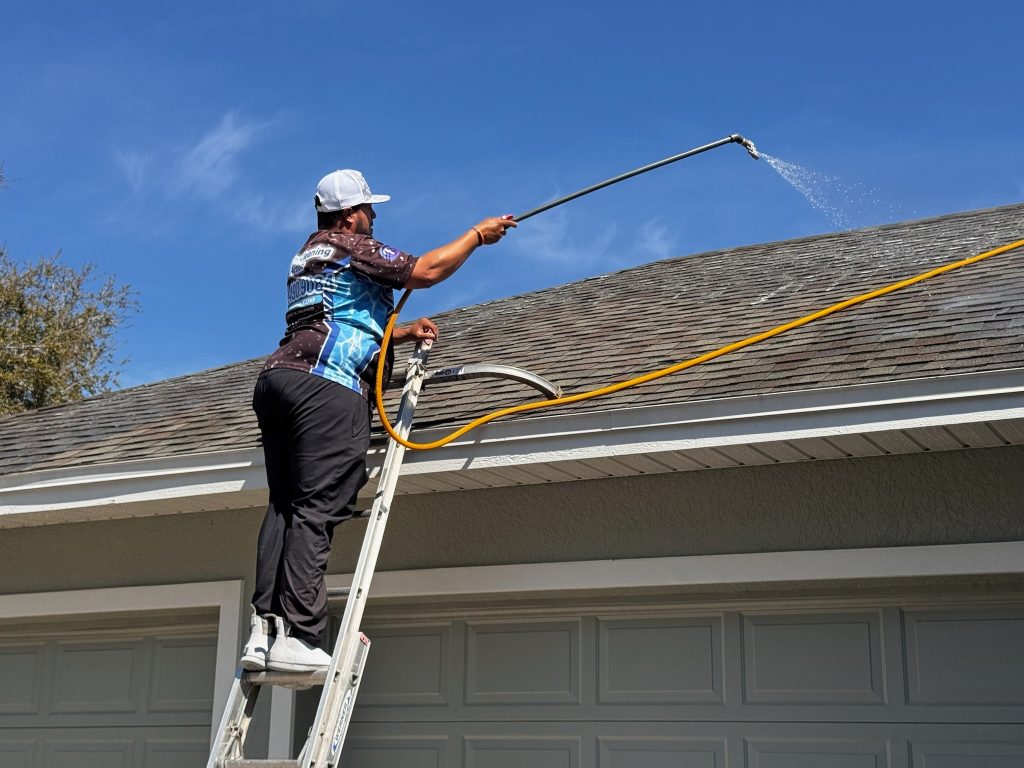
Soft washing, by contrast, uses low-pressure application combined with a specialized cleaning solution, typically a controlled mix that breaks down algae, moss, and mildew at the root without physically abrading the shingle surface. The solution does the work; the water simply rinses it away. This method is safer for asphalt shingles, tile roofs, and metal roofing alike, and it is the industry-recommended standard for residential and commercial roof cleaning.
A reputable roof cleaning company in Davenport will almost always default to soft washing for shingle roofs and reserve higher-pressure techniques only for durable surfaces like certain tile or metal systems where it is appropriate.
The Professional Roof Cleaning Process, Step by Step
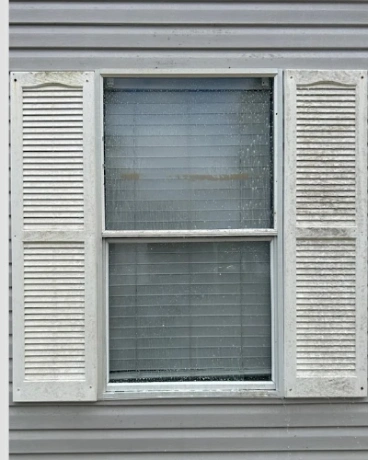
Understanding the process helps set realistic expectations and makes it easier to spot a company that is cutting corners.
- Inspection. A technician walks the property or uses a ladder and drone inspection to assess roof type, pitch, staining severity, and any pre-existing damage like loose shingles or exposed nail heads.
- Surrounding area protection. Landscaping, AC units, gutters, and windows are covered or pre-rinsed to protect them from runoff.
- Application of cleaning solution. A biodegradable, low-pressure solution is applied evenly across the roof surface, targeting algae, moss, and mildew.
- Dwell time. The solution is left to sit for a set period, allowing it to break down organic growth at the root rather than just on the surface.
- Low-pressure rinse. Clean water rinses the roof, removing dead organic material and residue without damaging shingles or tile.
- Final inspection and cleanup. The crew checks for missed spots, rinses surrounding plants and hardscape to neutralize any solution runoff, and confirms gutters are clear.
A full residential roof cleaning in Davenport typically takes two to four hours depending on roof size and staining severity, while larger commercial properties can take a full day or longer.
Residential Roof Cleaning in Davenport
Most residential requests fall into a few common categories: pre-sale cleaning to boost curb appeal, routine maintenance to protect shingle life, and reactive cleaning once staining has become noticeable from the street. Communities throughout Davenport, including areas like ChampionsGate, Providence, and Four Corners, tend to have HOA guidelines around roof appearance, and a stained roof can sometimes trigger a compliance notice. Scheduling a cleaning before that happens saves both money and hassle.
For homeowners preparing to sell, a clean roof is one of the highest-return exterior improvements available. Buyers and inspectors both notice roof condition early, and visible staining can incorrectly suggest the roof is older or more worn than it actually is, even when the shingles themselves have years of life left.
Commercial Roof Cleaning in Davenport
Commercial roof cleaning in Davenport comes with its own set of considerations that go beyond curb appeal. Business owners, property managers, and HOA boards typically need:
- Flexible scheduling around business hours or tenant occupancy to minimize disruption
- Documentation and proof of insurance for liability purposes, especially for larger retail centers, medical offices, or multi-tenant buildings
- Roof-type-specific treatment, since commercial properties often use flat, membrane, metal, or tile roofing rather than standard asphalt shingles.
- Preventive maintenance plans, since biological growth on commercial roofs can affect drainage systems and accelerate wear on membrane materials
- Compliance support, particularly for properties operating under strict HOA or commercial association appearance standards common throughout Polk County developments
A commercial roof often represents a much larger capital investment than a residential one, and organic buildup left untreated can interfere with drainage on low-slope or flat roofs, leading to standing water and premature material breakdown. Regular commercial roof cleaning is less about appearance and more about protecting that investment.
How Often Should a Roof Be Cleaned?
There is no single answer that fits every property, but general guidance based on typical Central Florida conditions looks like this:
- Shaded or tree-covered roofs: every 1 to 2 years
- Roofs with full sun exposure: every 2 to 3 years
- Commercial flat or membrane roofs: annual inspection, cleaning as needed based on drainage and growth
- Tile roofs: every 3 to 5 years, since tile tends to resist staining slightly longer than asphalt
Waiting until staining is severe usually means a longer, more intensive cleaning process and a higher chance that some discoloration has become permanent, particularly on aging shingles where algae has had time to break down granule coating.
Signs Your Roof Needs Cleaning Now
- Dark streaks running vertically down the roof slope, usually starting near vents or ridge lines
- Green or black patches that look thicker or fuzzy, typically moss or lichen
- Visible growth in roof valleys or areas that stay shaded most of the day
- A noticeable difference in roof color compared to neighboring homes of a similar age
- HOA notices or compliance letters referencing exterior appearance
If any of these sound familiar, it is worth getting an inspection before the growth spreads further or starts affecting shingle integrity.
What a Roof Cleaning Company in Davenport Should Offer
Not every provider operates the same way, and the difference often shows up in the results. When evaluating a roof cleaning company in Davenport, look for:
- Clear explanation of soft wash versus pressure wash methods and which one applies to your roof type
- Proof of liability insurance and, ideally, workers’ compensation coverage
- A written estimate that outlines scope, method, and any additional charges for gutter cleaning or moss removal
- Before-and-after photos from previous local jobs
- A guarantee or workmanship warranty on the cleaning itself
- Willingness to explain what the process will and will not fix, including any pre-existing shingle damage
Transparency at this stage is usually the clearest indicator of how the rest of the job will go.
What Roof Cleaning Cannot Fix
It is worth being upfront about this, since some marketing overpromises here. Roof cleaning removes algae, moss, mildew, and organic staining, and it can meaningfully extend the life of a roof by preventing further granule loss. It cannot repair structural damage, replace missing shingles, fix active leaks, or reverse UV fading that has already occurred. A good roof cleaning company in Davenport will flag these issues during inspection rather than clean over them and stay quiet.
Pricing Factors for Roof Cleaning in Davenport
Exact pricing depends on several variables, but the main factors that affect cost include:
- Roof size, typically measured in squares (100 square feet per square)
- Roof pitch and accessibility, since steep or complex rooflines take longer
- Severity of staining, moss, or lichen buildup
- Roof material, since tile, metal, and shingle roofs are treated differently
- Additional services like gutter cleaning or exterior house washing bundled in
Most residential roof cleaning projects in the Davenport area fall within a moderate range for a standard single-family home, with commercial pricing calculated separately based on square footage and roof type. Getting a few quotes with clear, itemized breakdowns is the best way to compare fairly.
Conclusion
A stained roof is one of those problems that tends to get worse quietly in the background until it suddenly becomes very visible from the street. Given how quickly algae and moss take hold in Davenport’s climate, staying ahead of it with routine cleaning is far more cost-effective than waiting until staining is sxevere or an HOA notice forces the issue. Whether it is a single-family home in Providence, a storefront near US-27, or a multi-tenant commercial building, working with an experienced roof cleaning company in Davenport that uses safe, manufacturer-approved methods protects both the appearance and the lifespan of the roof.
FAQ’s
How much does roof cleaning cost in Davenport, FL?
Pricing depends on roof size, pitch, material, and staining severity. Most residential jobs are priced per square foot or per roofing square, with commercial properties quoted separately. Requesting an on-site or photo-based estimate gives the most accurate number for your specific roof.
Is roof cleaning safe for asphalt shingles?
Yes, when done correctly. Soft washing uses low-pressure application and a specialized solution rather than high-pressure spray, which protects shingle granules and follows manufacturer guidelines from brands like GAF and CertainTeed that generally discourage pressure washing.
How long does professional roof cleaning take?
A standard residential roof typically takes two to four hours depending on size and staining level. Larger homes, steep pitches, or heavier moss growth can extend that timeframe. Commercial properties often require a full day or more.
Will roof cleaning remove all the stains permanently?
Cleaning removes existing algae, moss, and mildew effectively, but regrowth can occur over time due to Florida’s humidity. Many companies offer treatments that slow regrowth, and periodic maintenance cleaning every one to three years keeps stains from returning as quickly.
Can roof cleaning damage my roof?
Improper high-pressure washing can damage shingles, but professional soft washing is designed specifically to avoid that risk. Choosing a company that explains its method and carries insurance significantly reduces any chance of damage.
How often should Davenport homeowners clean their roofs?
Shaded or tree-covered roofs often need cleaning every one to two years, while sun-exposed roofs can typically go two to three years between cleanings. Tile roofs generally last a bit longer between treatments than standard asphalt shingles.